

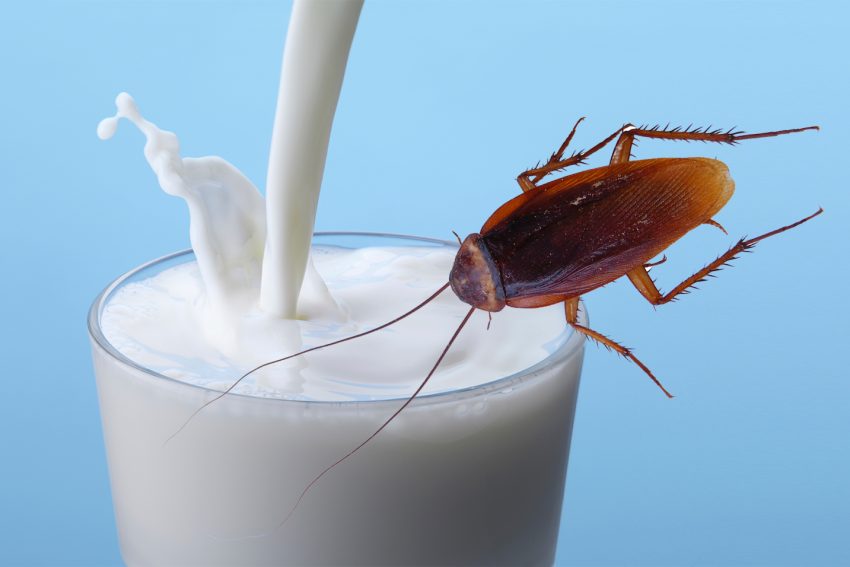
 ? Really? Well, that is what the researchers say this time. A study reveals that cockroach milk is loaded on protein goodness and the milk from this insect may be used as a nutritionally rich supplement that can be consumed by humans someday, say the researchers.
The scientist research was on the Pacific Beetle Cockroach belonging to the Diploptera punctata species, and they discovered that it provides the little baby insects with a food formula that is enriched in fat, protein and sugar. Cockroaches are capable of existing for a complete month without food and that is why it can be said to be “one of the most resilient and hardiest creatures on the planet”. This particular breed of cockroaches do not lay eggs and can breed their baby insects inside their own bodies and give birth to them live.
The director of school and educator programs at Fernbank Museum of Natural History in Atlanta, Becky Facer, stated that “Any liquid harvested from a cockroach is not true milk. At least not as we think of it.” When the food formula enters the guts of the baby cockroaches, protein crystals are formed from the insect liquid.
According to Leonard Chavas, another researcher who is a part of the study, who shows immense inquisitiveness about what this “insect liquid” is made out of, stated “The protein crystals are milk for the cockroach infant. It is important for its growth and development.” He stated that the protein crystals can supplement almost 4 times the energy cow’s milk and 3 times the energy levels that buffalo milk, are capable of providing in humans.
Becky, the research scientist also states that this insect liquid derived from the cockroach may be rich in proteins but is not true milk for sure, though it can be processed and studied further to be developed as a rich food supplement later.
The cockroach nourishes the embryos with this liquid that is enriched with protein. It has a brood sac or uterus as we term it, which secretes this protein rich liquid. This liquid is taken by the developing embryo and the protein crystals start to build up in the gut. The researchers have extracted one of the protein cystrals for further research.
